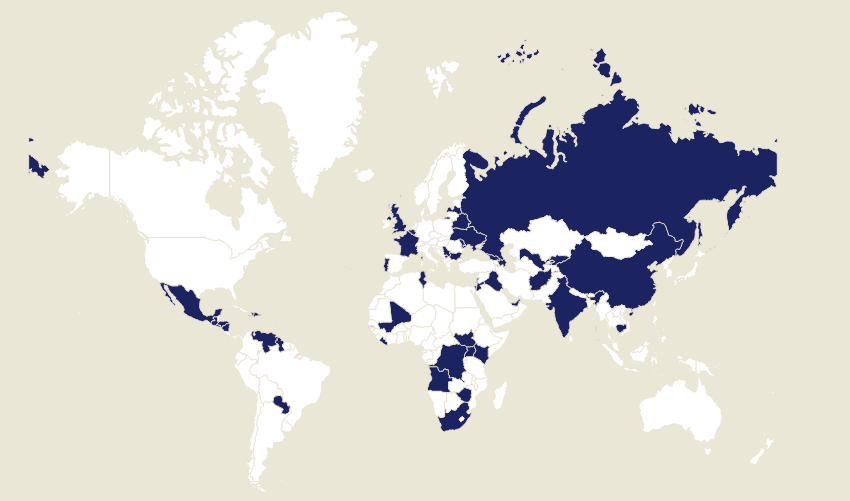
The last few years have seen a waning in the previous acceleration in the use of anti-corruption sanctions across all sanctioning jurisdictions, with relatively small changes to sanctions lists – both in terms of additions and removals. Larger changes however took place this year. The UK in April 2025 added 12 new people to its Global Anti-Corruption Sanctions and Switzerland in January 2026 designated 37 Venezuelans under its Foreign Illicit Assets Act.
Many jurisdictions that sanction persons for corruption update their lists more frequently towards the end of each year. However, changes do take place in between and several changes have taken place in particular under the UK’s Global Anti-Corruption Sanctions since our beginning of year update.
2024 has seen an acceleration of targeted anti-corruption listings, with 32 new individuals being sanctioned, proving once again the use of targeted sanctions as a powerful diplomatic and anti-corruption tool. As CiFAR launches its updated Sanctions Watch platform today, which tracks individuals sanctioned for reasons related to corruption, this blog takes stock of the changed listings across key anti-corruption sanctions regimes in 2024.
This report is intended as a snapshot of the legislative landscape surrounding breaches of international sanctions in these jurisdictions, the innovations that have been put in place, and the shortcomings that still need to be addressed. It presents a mixed picture in terms of frameworks and penalties applied: some countries considering breaches as administrative offences, others having the possibility to impose prison sentences. It also demonstrates discrepancies between sanctioning jurisdictions in how frozen assets and enforcement actions are publicly reported – making it harder for journalists, civil society and citizens to monitor sanctions implementation.
The first half of 2024 saw nine new individuals fall under various sanction systems for corrupt acts. With this latest update to the Sanctions Watch website, we are highlighting some particularly notorious cases.
To answer this question, CiFAR has recently conducted research published in a report From Sanctions to Investigations. Legislation, policy and practice linking investigations into the origins of sanctioned assets and recommendations for governments to strengthen the investigation and confiscation of sanctioned assets in From Sanctions to Investigations. Policy brief and recommendations.
The full report contains a discussion on importance of linking the imposition of sanctions to the opening of investigations into the origins of sanctioned wealth. It also includes detailed description of the situation across eight jurisdictions (Canada, France, Germany, Italy, Spain, Switzerland, the UK and the US) and a look into cross-border initiatives.
Between autumn 2022 and June 2023 CiFAR and European Investigative Collaborations, with the support of OCCRP and thanks to IJ4EU and the National Endowment for Democracy, coordinated the Russian Escape investigations into how far sanctions applied against Russian individuals following the invasion of Ukraine were being effectively implemented in Europe.
Is it possible to confiscate sanctioned assets and use them for public good? How to do this quickly and without compromising the rule of law? These are some of the questions that CiFAR has been trying to understand since the freezing of Tunisian, Egyptian and Ukrainian assets under the EU’s misappropriation sanctions.
Page 1 of 2
Next →